




 Alexander Kostin
Fact-checked by British Gambler
Spotted a mistake? Email
partners@britishgambler.co.uk
Alexander Kostin
Fact-checked by British Gambler
Spotted a mistake? Email
partners@britishgambler.co.uk
The affiliate model in online gambling isn’t collapsing overnight — but it is being quietly rewritten. If you rely on SEO, you’ve probably already felt it in your numbers, even if it’s hard to pinpoint exactly where things started to shift.
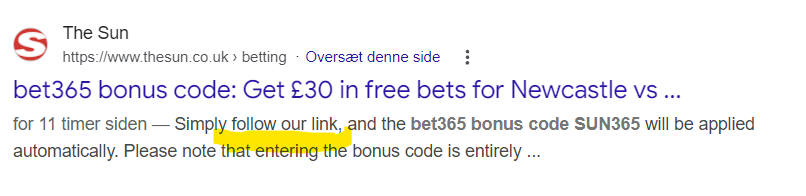
Over the past year, more and more gambling operators in the UK like bet365 and SBK have begun removing meaningful tracking from promo codes. They’re not eliminating codes entirely — they still exist for marketing — but unless a user clicks through a tracked affiliate link, those codes often don’t count. From the operator’s perspective, this makes sense. Codes get copied, shared, scraped, and surfaced directly in search results. Attribution becomes messy, and paying affiliates for traffic they can’t fully track becomes harder to justify.
But from our affiliate side, especially for independent publishers like BritishGambler.co.uk, this changes the entire equation.
Seems, operators use AI overview opporunities to make it harder for affiliates to earn. So why not to stop promoting them and move to dark net and black market companies instead?)
The New Reality of Attribution
The typical user journey today looks very different from what the affiliate model was built on. A user lands on your site through Google, reads your review or comparison, finds the best offer, copies the promo code, and then goes directly to the operator to sign up.
You’ve done everything right. You’ve created the content, ranked for a high-intent keyword, and guided the user towards a decision. In many cases, you’re even appearing in Google’s AI-generated results.
And yet, you don’t get paid.
Because the one thing that matters — the tracked click — never happened.
This is where the model starts to break. Attribution is no longer tied to influence, but to a very specific technical action. If that action disappears, so does your revenue, regardless of the role you played in the conversion.
Google’s Role in the Zero-Click Era
At the same time, Google is accelerating this shift. With AI Overviews and zero-click search results, users increasingly get everything they need without ever visiting a website. Offers, brand names, and even promo codes are displayed directly in search.
That means fewer clicks, even for top-ranking sites.
You can rank in the top five, or even be featured in AI results, and still see declining traffic and conversions. The visibility is there, but the value isn’t.
For affiliates built on search intent, this is a fundamental problem. The model assumes that visibility leads to clicks, and clicks lead to revenue. When the click disappears, the entire chain breaks.

An Uneven Playing Field
Not all affiliates are affected in the same way. Larger groups like Better Collective and Catena Media have spent years building diversified traffic sources. They’ve acquired media brands, built direct audiences, and invested in channels beyond search — email, push notifications, apps, and partnerships.
They’re still exposed to these changes, but they’re not dependent on a single channel.
Independent affiliates are in a different position. Many of us built businesses around organic search, comparison pages, and ranking for high-intent keywords. It worked because the model was predictable: rank well, capture traffic, convert users.
Now, that predictability is gone.
You can still rank — but you may not monetise.
When the Partnership Stops Feeling Like One
Affiliate marketing has always been performance-based, and that’s part of its appeal. You get paid for results, not promises. But that only works when both sides operate within a stable framework.
What we’re seeing now is a shift in control. Operators can change attribution rules overnight. They can decide which channels count, which actions are tracked, and which conversions are paid.
For affiliates, that creates a fragile position. You invest in content, SEO, and user acquisition, but the final outcome depends on rules you don’t control.
It raises a simple question: if you can no longer reliably track the value you create, what exactly are you being paid for?
More Than Just Promo Codes
It would be easy to frame this as a “promo code problem,” but it goes deeper than that. What’s really changing is ownership of the user journey.
Operators are moving towards systems where they control:
- the tracking
- the attribution
- the customer relationship
And increasingly, they don’t need affiliates in the same way they once did.
For affiliates, especially smaller ones, that creates a difficult reality. If you don’t control the user — if you don’t have a direct relationship with your audience — then your position in the value chain becomes weaker.
What’s Left for Independent Gambling Affiliates?
Right now, if your model is built purely on SEO and bonus-driven content, margins are being squeezed. Traffic alone is no longer enough. Rankings alone are no longer enough. Even high intent isn’t enough if it doesn’t translate into a tracked action.
That doesn’t mean affiliates are finished. But it does mean the model many of us relied on is changing fast.
The focus is shifting from capturing clicks to owning audiences. From ranking pages to building brands. From listing offers to creating real value that users recognise and return to.
The Only Honest Conclusion
The old model is breaking.
SEO still matters, but it’s no longer a complete strategy. Visibility without ownership is fragile. Traffic without attribution has limited value.
If you don’t own the user — you don’t own anything.
That’s the reality the industry is moving towards, whether we like it or not.